It's Simply Finance

The best page for economic and financial Updates

It's Simply Finance

Think savings, think investments, think Simply Finance

It's Simply Finance

Do you need information about the best investment products, go no further, this is the place

It's Simply Finance

Personal Finance made easy and enjoyable

It's Simply Finance

Raising investment savvy Nigerian youth


Powered By Blogger

Sunday, 18 October 2020

Do you still want to close your savings account??


Hello folks, I saw this article on someone's facebook wall and decided to bring it here because there's a fundamental flaw I noticed in this facebook post. Here's the article. 


THE POOR, THE RICH AND THE BANK
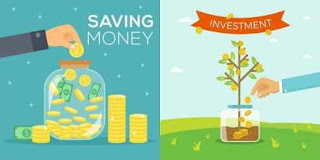
A bank is a broker between the poor and the rich. The common place where the poor and the rich meet is the bank. The poor brings money in the form of savings. The rich takes it through borrowing. A poor person saves the money because they have more money than their thinking capacity. They keep the money in the bank so that they can go and think of what to do with the money they have saved. On the other side, the rich people come to pick that money through borrowing because they have more ideas than the money they have. On a practical side, please who can show me one billionaire who got rich through saving. I will show you a million Africans who have money saved in the banks and are still renting the houses that the millionaires and billionaires built through the poor people's savings which the rich borrowed from the bank. I have now realised that the best savings and interests are acquired through investments and not savings. It will surprise you that the only money that the rich allow in their account is minimum balance to keep it alive. Every cash they have is seen on one investment or another. Decide today to remove that money from your account (savings) and look for an investment to reap twice in due course.  


On the surface, this write up is, to say the least apt. But there's something about the write up that I find totally awkward. First of all, it is out of place to downplay the importance of savings culture in a bid to promote investing. The poster took time to do a comparative analysis of savings and investment. But is there any basis for the comparison? Telling someone to bypass saving and jump into investing is like telling a newborn to bypass crawling and start running. A newborn must crawl first before walking, then running. The same applies to the journey to financial security. If you're starting from the scratch, the first step is to get a job, the next step is to save a sizeable proportion of your income.  After accumulating a reasonable amount in your savings, you can then put it in an investment vehicle that you fully understand, be it real estate, retail business, paper assets and so on. The important thing is to make sure that you have a deep understanding of the investment vehicle you're putting your money.  So saving is a very important step to financial security. I can remember my childhood days when we used to have saving challenge between me and my brother. It's a joyful moment when I open my Kolo and see how much I was able to put together. Nowadays, it's difficult, nay impossible to see young ones talk about saving. Every penny they get is used for sports betting. Everybody is thinking about how to use 100 naira to place a bet and win millions. This can be attributed to the get-rich-quick mindset of this age.
To be sincere, banks don't lend money to people without savings. Don't let all those online entrepreneurs and motivational speakers deceive you to believe that you can just walk into a bank and get a loan to fund your start up. Some years back, I went to a microfinance bank to get a loan for my start up. But their manager told me plainly that they don't fund business ideas. They only support existing businesses. He said that for me to qualify for a loan, I must have an account with them. Then after six months, they'll check my cashflow and then determine if I'm qualified for a loan. In other words, they're going to check my earnings and saving capacity within the six months probation period before they can lend me money. You see how the system works. So if you can't save, you can't get loans from banks. Don't let motivational speakers deceive you with examples of the Dangotes and Bill Gates of this world.
In summary, savings has not gone out of fashion. It's a very important step towards financial security. But one important thing is to allocate a part of your savings for investing. For those that are still saving, kudos to you and keep it up. For others that are yet to start, please put it into consideration. Gracias!!! 

Saturday, 10 October 2020

Red flags to watch for when investing


Financial fraudsters are getting innovative by the day, however with this format you can be steps ahead of them.  


Check their registration status.


As a matter of fact, all brokers, fund managers and investment advisers are required by law to register and get statutory licence from the Securities and Exchange Commission. It is very necessary that your fund manager be captured in the SEC database. This is to give you a platform to seek redress if you're not treated fairly by your fund manager. The SEC as a regulatory body also ensure that your money manager is a professional in the field of money management. Always visit the SEC  website and check if the fund being marketed to you is registered with the SEC. It would save you from "premium tears" thereafter.

 
Be skeptical of investment pitches that guarantee a certain spectacular return.


Truth be told apart from government backed securities such as treasury bills (or some short term money market instruments), there is no financial investment products that can give you guaranteed returns. Returns on financial investments are subject to some forces like interest rates, forex fluctuations, boom and burst cycle, political turmoil, and so on and so forth. These factors make financial investments a game of probabilities. So whenever a salesperson is telling you about a guaranteed return, you're about to part ways with your money.


Ignore the "everyone is doing it" story.


Don't believe claims that "everyone" is on the deal. There's this thing I noticed about human psychology. Human beings are wired to seek validation from social circles. They feel comfortable about what they want to do once there are other people within their social group that are doing the same thing. That is exactly how ponzi scheme thrive. Those fraudulent fund managers are experts in human psychology. Be wary of a sales pitch that focuses on how many people are investing, without telling you why the investment is sound.


Check for inconsistency.
Have you been told to invest in a company's fund, then you discover that their account details bears the name of an entirely different company. Or at some points, you realize that the identity of their operators are changing. Once you notice inconsistency, it's time to pull out of the deal.

Don't be rushed.


If the salesperson tells you that the investment opportunities are limited, consider it a red flag. A legit investment will still be there tomorrow. 


Don't let your guards down, arm yourself with information. Safeguard your money by learning how to spot red flags.


Sunday, 27 September 2020

Stop asking this question


"I have some money in my account. What can I invest in?". I've gotten this question a number of times. In response, I used to ask,  what's your investment objective? The next thing is a blank expression. That's the reason why I want to talk a little bit about investment objective. I've discussed with a lot of people who have taken up investment products and every single time I ask them the question of why have you chosen this specific product, many people can't give me an answer. When investing, it is ideal to have a reason why we are putting our money away for future use. Now the question you need to ask yourself is; with this specific investment, what am I trying to achieve.
First of all, let me use the analogy of traveling to illustrate the concept of investment objective. When you want to travel, let's say for instance you want to move from Owerri to Lagos, there is a reason for the type of vehicle you choose to convey you to your destination. You may choose a space bus because of it's fast. Or you choose a luxury bus because you want comfort and relative safety. To some people, getting to their destination quickly is paramount, whereas to others, comfort and safety is sacrosanct. These are travelling objectives. The same thing applies to investing. When you are choosing investment vehicle, irrespective of the the asset class you want, it is necessary to understand what your own investment objective is. Remember that your investment objective is peculiar to you. Your investment objective and mine need not be the same. This is why you and I may not go for the same financial investment products. Specific financial products speak to specific investment objectives.

Now let's see the various investment objectives

Capital preservation. Basically, when you're talking about capital preservation you're looking at preserving the value of the money you want to put away. For instance, if you want to buy a car, maybe Toyota corolla whose retail price is 1.2 million naira. But you don't have the lump sum of money. You might choose to postpone the purchase till the end of the year in order to save enough money. However, there's this thing called inflation, which might push up the price of the car by the end of the year. In order not to allow inflation prevent you from buying the car by year end, you may start putting your savings into an investment vehicle that can beat inflation and preserve the value of your money. That is what capital preservation looks like.


Another investment objective is capital growth. When you're doing capital growth, you essentially want your money to double or triple (as the case may be) over some period of time. So, in this situation, you want your money to actually grow far above inflation. Generally, capital growth happens due to compound interest.


Another investment objective to consider is asset appreciation. Here, we're looking at a situation where properties appreciate in their retail value. For instance, if you bought a piece of land and in the next few years, the market value of that same piece of land is worth far higher than the purchase value. Note that not all properties appreciate in value.

Last but not the least is income generation. If you're the type that cannot wait for your investment to accumulate value over time, that is you want your returns immediately,  income generation is your investment objective. A good example is through rental income. Rental income can be realized from leasing pieces of land, residential apartments, office space, shopping complex. Others can be vehicles, machines, party equipments etc.


It is important to have all these option at heart in order not to be in a situation where you will be asking " I have some money in my account, what do I invest in?  Even if you've not started earning an income, probably you're still a student, this piece of information is for you. It's important to develop your financial aptitude now so that when you eventually start earning, your investment objective will be very clear to you. 

Note that this article is not an investment advice. If you need one, please consult a financial advisor registered with the SEC. 

Tuesday, 22 September 2020

Why you should grab any dollar in sight!


There was a day I attended a business meeting with some folks somewhere. In the course of the meeting, the moderator gave us forms to open an account. In that form, there was an option to open a naira or dollar account. The moderator instructed us to tick the dollar box. I raised my hand in objection and simply asked, " what if I want to open a naira account? He cast a funny glance at me as if he wanted to ask me " have you been living under the rocks? I insisted on standing by the naira, though I later felt stupid. At that point, he made me to realize that the naira is dead and gone. Yes, if you trace the trajectory of our exchange rate regime from the 80s, you may want to doubt the capacity of the naira to function as a store of value. The exchange rate has increased by more than 5000% since 1986! Can you beat that?? Without further ado, let's see the reasons why the redemption of naira is a lost battle.
Firstly, our insatiable appetite for foreign goods: As ridiculous as it may sound, we prefer to buy fairly used foreign goods than brand new locally made alternative. Not too long ago, members of the National Assembly bought utility vehicles from Japan (Toyota) when we have an alternative in Nnewi (Innoson). We prefer parboiled rice from Thailand to local alternative in Abakaliki. We prefer Italian shoe and despise Aba shoes. The few industries we have prefer foreign inputs to local alternatives. The fuel that power our machines is refined abroad. The list is endless. Data released by the CBN shows that our trade deficit has been on the increase, even during the pandemic. I wonder how the naira can survive this onslaught. 
Secondly, the CBN have implemented policies that led to a systematic devaluation of the naira. I won't go into details here as I have another write up dedicated to this subject. Just know that the CBN, through their actions (and inaction) have successfully placed the naira on the path of annihilation.
Another factor is globalization. The world is a global village, so they say. International transactions are made just by clicking a button. A lot of people order for goods from abroad in the comfort of their room. Companies can even raise capital for business abroad. A good example is Jumia. They bypassed Nigeria Stock Exchange and went to New York Stock Exchange (NYSE) to float their shares. At the end of the day, US dollar wins.
In conclusion, I think the US dollars is the new bride in Nigeria, especially when it comes to financial assets. You might have noticed that most mutual funds in Nigeria now have dollar denominated funds.  US dollar deserves a place in your portfolio.


Don't take my write up for investment advice. Always consult a registered financial advisor. 

Saturday, 19 September 2020

Nigerian stocks will burn your fingers! See reasons..


Whenever the word investment is mentioned, the first thing that comes to mind is the stock market. Stocks simply refer to ownership stake in a company expressed in units known as shares. In ideal situation, it is the choice destination for capital meant for investment. There are three major ways through which people earn in shares. They are dividends, capital appreciation and short selling. If you've been putting down your money in the Nigerian stock market, you'd agree with me that the stock market (in the Nigerian context) is a legalized casino. Yes, thats what it is! Here are my reasons for giving the Nigerian stock market a casino tag:


Moribund economy
Everyone can agree with me that the Nigerian economy has been on a consistent downward spiral over the years. Economically, things has been going from bad to worse in the past two decades. The stock market mirrors the economy. Whenever you see a thriving stock market in the midst of a cascading economy, be rest assured that a bubble is building, and sooner than later, a catastrophic burst is on its way. That was exactly what happened in the 2007/2008 market crash. The stock market is as resilient as the economy. So a comatose macroeconomic environment must birth a comatose stock market. 


Hot money from foreign portfolio investors
Stocks rely heavily on foreign portfolio investors to drive demand up. Since former CBN Governor, Sanusi Lamido Sanusi allowed foreign investors to repatriate any portfolio investment into the country without restrictions, stocks have become heavily reliant on hot money to keep valuations high. Thus, when foreign investors exit, stocks suffer. They create a bubble when they enter our markets and leave bears to dominate when they exit, until they are ready to get back in again.


Recurring currency devaluation
Our economy is inextricably tied to oil exports. Consequently, the fluctuations in international oil price sends the Nigerian economy to a rollercoaster. What I mean here is that whenever the international oil price is high, there tend to be an upsurge in economic activity owing to the increase in fx revenue. But whenever oil price falls to an all time low, economic activity grinds to a halt. Due to forex scarcity to pay for our ever increasing imports, the CBN usually comes up with some drastic policies some of which includes currency devaluation. Once this happens, the market capitalization of all companies drop (in real value).


Liquidity crisis 
Simply put, liquidity refers to the presence of so many buyers and sellers with varieties of products in a market. This situation guarantees the buyer of a product that there's an available market whenever there's need to sell the product. In the stock market, this situation encourages many people to participate. The Nigerian stock market is far from being liquid.  We have relatively few participants in our capital market. (The market capitalization of the entire Nigerian stock market is less than 10% of the market capitalization of Apple Inc). This situation has made it very difficult to sell a stock profitably. Moreover, the availability of financial products is grossly inadequate. Though there's been promises to introduce financial derivatives into the market, it has remained promises till now. Short selling of shares is practically impossible at the moment. 


Absence of corporate governance
A considerable number of quoted companies in Nigeria lack the culture of corporate governance. Some of them engage in insider trading of their shares and other unscrupulous activities. Moreover they're poorly regulated. Some of the sharp practices that contributed to the market crash in 2008 has been swept under the carpet. Nobody was held accountable.


Conclusion
These are some of the reasons why the Nigerian stock market cannot be considered as a viable investment. However, there are possibilities of these situations improving as time goes on. But for now, the Nigerian stock market is not so different from a grand casino.  


Don't take this for investment advice. Always consult a registered financial advisor.  

Thursday, 17 September 2020

Don't put your money in Crowd1 without reading this!


There has been a number of multilevel marketing ventures springing up almost on a daily basis since the beginning of this year. I don't know whether to attribute this to the global economic drawback resulting from COVID-19 pandemic. Though I know a few of these MLM ventures were existing before now, but they picked momentum this year.  Some of them are Crowd1, Norland, Daily income stores, Superlife, NRI, just to mention a few. As I'm typing this, more are still springing up.
Don't get me wrong, multilevel marketing is a viable business model, but there's a thin line between multilevel marketing and pyramid scheme. And in the Nigerian context, many people engage in pyramid scheme in the guise of multilevel marketing. Times are hard, things are tough.  This is the reason why it is very important to do your due diligence before committing your hard earned money into any money making venture. In the following series of write up, I'll do a quick review of these MLMs mentioned above so that those of us throwing our money into these ventures will get a broad understanding of what we're doing. Let's start with Crowd1.

Crowd1
According to the promoters, Crowd1 is essentially an online opportunity that offers shares that you can purchase and earn from building a network of investing members shares as well (though they don't call it shares, they call it "owners right"). 


Location
It is not clear. According to the promoters, Crowd1 started in Sweden, but have their headquarters in Madrid Spain. However, a check on their website proved otherwise. They have their headquarters in the United Arab Emirates.


Ownership (shareholders) structure:
It is mired in secrecy( or rather confusion ). Depending on the promoter you ask, you'll get different answers. Some of them refer to Johan Stael von Holstein as the leader. Others regard Stelios Piskopianos as the leader. Some still refer to Jonas Werner as the leader. However, a check on their website didn't disclose anything about the shareholders of crowd1.


What products are they offering:
The question of whether crowd1 sells products to customers other than its members is important. If a company has a direct sale of a product as its main purpose, it is in most countries, considered legal MLM. If the company's main business is the recruitment of new members that sends money up the chain, it is considered a pyramid scheme - something that is illegal in most countries. In Crowd1,they give very scanty information about their products. They're in the business of selling "educational packages. They're also affiliated to some online gaming and social media firms. According to the promoters, as these firms are making money, Crowd1 is making money too. However, I've never seen the promoters encouraging members to promote the games of their affiliated companies or play those games. All they do is to encourage members to bring in other people into the network, with promises of mouth watering benefits. If you ask me, they make money as long as others are joining the network, who must fork out at least €100 (50,000 naira).

Countries where Crowd1 has been banned or under investigation
Crowd1 was banned in Namibia in February 2020, and countries including Burundi, Paraguay, the Philippines and New Zealand have cautioned against it. In South Africa, it is under investigation by the South Africa Reserve Bank's prudential authority. The Reserve Bank said that it never issued a license to the scheme for any financial product, financial service or market infrastructure. The bank also warned customers against investing with unregulated entities and to remain vigilant through conducting due diligent assessments.
In Namibia, the Central Bank authority stated thus " Crowd1 does not sell material products and does not provide any service of significant value. The primary source of income of crowd1 is the sale of membership packages to new members. It is clear that the concept is not sustainable and will result in people, especially those at the bottom of the scheme, loosing their money".
In Burundi, authorities launched an investigation against crowd1 in January this year after arresting 17 people involved and affiliated with the network, the African News Agency reports. However, it is unclear how this investigation went.
In Paraguay, the country's financial supervisory authority has issued a warning regarding crowd1. In addition, the company's offer has been defined as an unregistered security, which means that people who market the company's services can be fined or receive up to three years in prison. 

Conclusion
From the foregoing, it is obvious that Crowd1 bears all the hallmarks of a pyramid scheme. I'm not saying that it's bad, but please be careful while dealing with them, especially as we're getting close to December ( remember MMM during December 2017). I know most people already in the scheme will say " but we're making money". That's true. MMM equally made people millionaires. However, it ended with sour taste in their mouth. Any business model that prides itself with making people millionaires without solving a problem is not worth your time.  A word is enough for the wise!  Let me know your thoughts.... 


Wednesday, 23 October 2019

How to remain illiterate after graduation


As a little child, you’re a curious being, you’re an experimental scientist. You wanted to learn, you wanted to research, you wanted to know. You love education. But one day, you were taken to school and a teacher started telling you that what education means is for you to cram what a teacher teaches you and write it back to her during a test or exam. By the time you’re done with schooling, you honestly think that you’re educated. SCAM!!
Sometime ago, I watched a TV show where Americans were asked to recall any books they read, just any book. Out of about 10 persons surveyed on the street, I think only one of them was able to remember the name of a book he read. Americans really tried. Here in Nigeria, only one out of a thousand ever read a book once they leave school. Somehow, when people go to the university and graduate with a degree, something in them tell them that they are educated, so if you’re educated why bother reading books any longer.
Certificates can really deceive you.
At some point, I started wondering; why do we judge people by the decorated paper they are carrying. Why do we think someone is smart or educated simply because he has a degree which is a mere paper. I believe so strongly that the number one evil in our educational system is the certificate or degree. Because people are given this decorated paper, they somehow believe that education is in the paper. The implication of this is that students in school study not because thay want to learn but because they want the paper, and immediately after they get the paper, that’s the end of education. If you think this isn’t true answer this; why is it that most people stop reading immediatetly after they leave school? The reason is that they think they’re already educated since they have the degree.
The true education.
For more than one decade now, I believe that school doesn’t give education. Instead school indoctrinates. School teaches you what the industrialists want you to know. School teaches you what the politicians want you to be. Let me explain; there was no public school in the world for the most of human existence. What we know as public school today is less than 2000 years and the foundation is greatly questionable. What we know as public education was greatly influenced by 3 powers; the spiritual leaders, the industrialists and the politicians. And as you may guess, the industrialists had the last laugh because they have a lot of money to influence the system. Do you wonder why you are programmed to be an employee? Do you wonder why you are only encouraged to be like everyone and do what everyone does? Well, your education was never important to the founding fathers of the school system. What they want to achieve was to make you a labourer, and as a labourer, you don’t need to be creative or even educated. Just know how to obey orders.
Degree and the jobs
Until recent time, the university degree is required by every employer on the planet. But that’s changing so fast.  For example, I’ve been in a company where nobody was ever employed because of their degree. Education to me is about self development. Education is all about skills. Education is all about what you know and what you can do with what you know. Education has nothing to do with the degree or certificate. I believe so strongly that one of the ways we can have a better education system is by destroying every certificates in our schools. If students know that the employers would judge them by what they know and by the solution they can provide, they’ll get the true education, and even after they get the job, they will continue getting education because they know that they must increase their value before an employer promotes them. I think that trend has started already.
According to Glassdoor, most fortune 500 companies like Google, Apple, Starbucks, Microsoft etc no longer employ on the basis of certification. This trend is gaining momentum worldwide. Come to think of it, does the degree of anyone solve problems in the workplace? Hell no! What solve the problem are people’s brains and this requires constant education.
Education is not the degree, neither is it the university you attended. Education is learning and knowing. It is what you know and the problems you can solve with what you know. You can’t stop getting education because you can’t know all you have to know about life. If you stop learning after school, you’re an illiterate! If the last time you read a book was the time you had exam, you’re a stark illiterate!
Education outside the walls
Don’t be decieved that education lives inside the four walls of the school. The real education is outside the wall. Your observation of the world around you, your curiosity to question things and find answer, your eagerness to know about money, marriage, relationships, humans, leadership and life in general , that’s education.
Which book are you reading now? Which book did you read last month? Which audio book do you have on your phone? How many educative blogs do you visit? The school programmed you to believe that once you have a degree, you’re educated. But the truth is that the day you stop getting education is the day your brain cells start shrinking. You ought to be improving your mind everyday. Education is a constant learning and improvement of your mind.

Tuesday, 16 July 2019

School na scam! How true?

The above mentioned statement has taken a cliche status and is very popular among young people nowadays. A lot of people think that being studious is a waste of time and effort. Is that true?
In my opinion what I consider as a waste of time and effort is going to school without purpose. Most young people go to school because they major in certain subjects or because their parents or friends told them the course to study. Sometimes they make choices based on where they believe the jobs are. One thing they fail to do is to know who they're and what they want as individual. They have this illusion that a university degree is a golden ticket to success. That is totally wrong.
Sometime ago I read on the social media that a number of S&P 500 companies no longer hire exclusively on the basis of university certification. Why is that?  It is because they know that they need talents and good people. Certificates don't guarantee these qualities. Having a certificate does not make one a great employee, it doesn't make one a high performance individual. There are so many other factors involved.
For those that would like to venture into business, I think having a firm grasp of these areas of study is essential
Accounting - the ability to read and interpret financial statements
Economics - knowing supply and demand factors and market trends both at national level and global scale.
Marketing, even though a lot of marketing texts out there are outdated, but it won't hurt to have the basic knowledge.
Communication - how to effectively transmit your ideas to others and get the desired response.
It is equally important to learn how to work on different projects with different class mates, learn how to coordinate and be a good team player.
It is not degree that makes people successful but the knowledge and skills accumulated through school. Equally, there's need to have a plan to develop and continuously hone your skills that would provide the capacity to become better individuals and more competent persons. Thinking that a degree is all you need and that after school, there's no need to learn anymore, that's a big problem. That's the wrong expectation.
Finally, if you want to be successful, have it in mind that schooling may stop but learning is a continuous process.

Wednesday, 26 June 2019

Emotional side of investing

There are two parts to the decisions we make. The first part relies on knowledge, fact, logic, and what we would call common sense. The other, relies on other intangible things like emotions, intuition, fear, worry, hope, and feelings generally.
Whenever we are torn between making a decision that splits us between our ‘brain’ and our heart, one has to give way – and logic isn’t always right. Investing is an emotional business. It requires setting asides our hard-earned funds, and the emotions that come with possible losses can lead us to making biased decisions.
An active investor has to deal with a myriad of different emotions as he follows the market and watches the rise and fall (volatility) of his investments. These emotions range from fear/anxiety, investor expectation, overreaction on pieces of information and even stress.
They can be so pronounced that even an experienced investor with a well laid out investment strategy can still fall prey to emotions overriding rational thinking or logic. Here are some elements that propel emotional investing.
Information
Investors typically get information from many sources. They could be mainstream sources like the news or could be entirely based on public speculation. Investors can get lost in the multiple sources of information and make biased decisions.
In fact, because no market has perfect information, the information received would almost always not be credible and will ultimately not matter. Acting on such information and seeing it go wrong would force yet another emotion that can ultimately make the investor completely uninterested in investing altogether – regret.
Another way information can go wrong is when investors try out new investment areas because their friends or family members have tried it and it worked. Great opportunities might be too good to be true as they would ultimately carry more risk than the investor can handle as the basis of their exceptional returns.
Risk
No investor wants to lose money; as such, where an investor notices a downward trend, he or she is sent into a frenzy of panic. Investors need to have risk and their level of risk tolerance in mind before buying into stocks or investing in securities altogether.
Investors who are conscious of the risk factor from the onset can curb the effect of emotional investing by remaining within a comfortable risk threshold. A great way to mitigate the possibility of emotional investing or making biased investment decisions because of the emotions attached to risk, is to seek out ways to mitigate risk.
A properly hedged investment strategy would keep the investor generally relaxed and open to carefully assessing market volatility. Another great idea is to invest only funds you can afford to do without for the longest period.
The moment your investment becomes an important source of personal income, chances are that you would react emotionally to changes in the market.
Investor Expectation
Another reason the investor begins to function emotionally is that his or her expectations do not match the flow of activities in the market. Every investor wants to make money from his or her investment by way of investment growth.
The challenge comes when the investor is fixated on a certain degree of growth based on market indices, timing strategies, trend analysis and other forms of analysis. When things seem to go awry, the investor loses track of the goal and becomes impulsive.
While these are just some of the reasons investors bring emotions into the investing game, emotions cannot be eliminated form investing. In our next post, we would explore specific ways of managing emotions while investing.

Saturday, 3 November 2018

If you're at these 5 critical points in your life, then you need a financial advisor.

It is common that people seek professional attention when confronted with problems beyond their managerial capacity. When we feel sick, we seek the attention of a medical doctor. When the car changes sound, we look for a car mechanic. When arrested by law enforcement agents, we reach for a lawyer.  When the furniture is not standing upright, we look for a carpenter. The list is exhaustive. But when confronted with financial issues, most people think it's personal and they can figure it out. It's difficult, especially in this part of the world to seek the assistance of financial advisors. But statistics shows that most of the challenges faced by people in the world today is rooted in money or money related issue. Most failed marriages today are consequences of money issues gone bad. Companies are folding up on a daily basis. Individuals and businesses are running into debt owing to bad investments. Most crimes committed today are because of financial pressure. There can't be a better time to seek professional advice.
Who then is a financial advisor?
According to Investopedia, a financial advisor (or adviser) is a professional who provides financial guidance to clients based on their needs and goals. Typically, they provide clients with financial products, services, planning or advice related to investing, retirement, insurance, mortgages, college savings, estate planning, taxes and more. Below is the best time to engage one.

You just got a job: Getting a job marks the beginning of a steady cash flow for many. But one thing about this cash flow is that it is not permanent. It must surely end either through resignation, retrenchment or retirement. This cash flow should be properly channelled in order to make something reasonable out of it. Poor financial decisions are inevitable if you don't get sound financial advice. The proper thing to do is to have a plan and meet a financial advisor to assist you draw a road map on how to actualize those plans. Nothing works successfully without a detailed plan and an unwavering commitment to stick to the plan.

You just inherited an asset: If a loved one has passed and you're expecting to receive an inheritance, you may have a number of questions about the process; such as is the inheritance taxable and what to do after receiving the inheritance. Depending on your goals and what type of asset you inherited, your options may vary. At this point, you need the assistance of seasoned financial advisor. Transferring wealth from one generation to the other is difficult in this part of the world. Most people that inherited some form of investment end up mismanaging it. This is a consequence of lack of guidance by a financial advisor.

You just got married: Getting married is an exciting time in life but it can also be a time of significant financial change and stress. First there is the cost of the wedding itself- and the budget you'll have to tie yourself to so you can have exactly the wedding you want. Then, when the honeymoon is over, there's life ahead with all the financial decisions you'll make together as a newly married couple. Also bear in mind that sooner or later, you'll become parents. Raising children places financial obligation on parents. There's no better time to see a financial advisor.

You want to raise capital for your business: Have you ever tried to get a loan from Financial institution for your business without success? Have you tried to get equity capital for your business only to be turned down by investors? There may be something you're doing wrong. You see there are some critical information these capital providers are looking for in your books that'll determine if they're going to provide the much needed capital or not. Financial advisors understand this better than you and the earlier you engage them to assist you, the better.

When you want to make big investment: Most persons find themselves in a quandary when it comes to investment. Some start to ask; do I buy shares, funds, piece of real estate, commodities etc. If you're thinking of investing in the above-mentioned products, you may feel confident to buy them directly from a broker or fund without taking advice. However, these products are harder to understand than cash savings products, and by not taking advice, you may not be considering all of the options available to you. There's also a risk that you may buy a product that's not suitable for you because you don't understand it. Advice can help you buy a better product than the one you choose yourself. An advisor will also have the expertise and knowledge to find better options, as some products are only available if you go through an advisor.

Tuesday, 2 October 2018

Can you earn in your sleep? Absolutely yes! Here's how..


You work hard for your money, yet your paychecks won’t cover your costs forever. Whether you’re looking to retire or simply to start having some of that hard-earned money do the heavy lifting for you, you probably want to start looking for ways to earn passive income.

Passive income -- or money you earn while you sleep -- can become a tool you can use to cover your costs. That will allow you to focus more of your time on things you want to do rather than on earning money just to assure you have a roof over your head, clothes on your back, and food in your belly. These seven approaches will let your money do much of the work of earning more money for you.

1. Own dividend paying stocks.
When you buy a typical share of stock, you become a partial owner of that business. As a partial owner, you get your portion of the rewards of that ownership. That includes any dividends the company declares and pays based on its earnings.
The company’s employees do the hard work of earning the money for you. As a shareholder in a successful dividend paying company, you simply sit back and collect the cold, hard, cash rewards from the financial risk you’re taking with your money

2. Own rental real estate.
Land lording is a time-honored approach to generating cash. Particularly once you’ve owned a property for a while or if you have the ability to invest in real estate with multiple tenants, it’s quite possible for your rents to well exceed your costs of owning the property.
That said, direct real estate ownership isn’t entirely a passive business. You need to find tenants, take care of maintenance and repairs, sometimes be a bit assertive in collecting the rent, and be able to manage through periods of vacancies.
If that sounds too much like work for your idea of passive income, you can either farm out operations of your real estate to an external partner or you can invest in publicly traded real estate companies. Real Estate Investment Trusts (REITs) are businesses that specialize in owning or financing real estate investments. They are required to pay at least 90% of their income as dividends to maintain their pass-through tax status, which typically leads to higher yields than ordinary stocks offer.

3. Be the silent partner in a business.
Many businesses -- particularly in the energy sector -- are structured as limited partnerships. In such a business, the limited partner shares in the profits of the business but generally has no actual responsibility for its operations. In effect, the limited partner provides financial support, while the other side of the partnership -- the general partner -- runs the day to day operations while also sharing in the profits.
The thing to remember with limited partnerships is that they are pass through entities. The partners are responsible for paying taxes on the income the partnership earns, whether or not they actually receive a dime of that income in the form of a distribution. As a result, most publicly traded limited partnerships tend to pay high distributions, to encourage investors to become partners despite that tax situation.

4. Loan money to a company or government
If you want an investment that’s lower risk than owning part of a business, consider lending money to that same company instead, and receive interest income in return. A company’s bonds take a higher priority in the capital structure than its stock does. Indeed, defaulting on a bond interest or principal payment will typically trigger a default, which could cede control of the company from its stockholders to its bondholders. That makes it incredibly likely that if a company can pay its bonds that it will pay its bonds.
If even that seems too risky, you can also loan money to governments, including the Nigeria Federal government (through FGN bond) which has the ability to print money to pay its bonds if it needs to do so. Note, though, that whether you’re loaning to a company or to a government, the tradeoff is that for the lower risk associated with lending vs. ownership usually comes a lower overall expected rate of return.
Of course you can't be quite successful in this regard without the assistance of a reputable asset manager that understands your situation and knows exactly the financial instruments that can take you from where you are to where you wanna be. Moreover as a beginner, it's important to start with what your risk level can accommodate. Mutual funds may be the best place to start. The mutual funds with competitive rates can be a bit difficult to get. I'll recommend Abacus money market funds managed by Investment One Financial Services. Contact me on nnamdinkemakolam@yahoo.com for more information on mutual funds, though I'll make a write-up on that.

5. Write options for premium income
On the flip side, if you’re willing to partake in high risk investing, you can write (sell) options to collect the premiums as income. Option buyers pay an additional premium -- known as the time value -- for the right to either buy or sell a stock at a given price on or before a given date. The option writer collects that premium and gets to keep it regardless of whether that person has to make good on delivering or accepting the underlying stock.
Note that collecting that premium is far from a free money investment, however. Options are a leveraged investment, and it’s entirely possible to lose more money than you invested in some option strategies if the market moves against you.

6. Pay off your debts
If you’re in debt -- any kind of debt -- paying that debt off may give you the biggest effective raise of all. Remember that when you’re paying on your debt, you typically pay both interest and principal. The interest is money you’re paying above and beyond what the item would have cost you in the first place had you paid cash up front. The principal payment represents cash flow out of your pocket that you free up to put towards another use once it’s no longer tied to that debt.
While paying off your debt isn’t technically the same as earning money, at the end of the day, it has the same effect on your wallet. After all, money you’re no longer putting towards debt service is money you no longer have to have coming in to cover your costs of living. That gives you more breathing room with your available cash or frees you up to not have to work that much harder to cover your remaining costs. Either way, it represents money doing the hard work for you, giving you more control over your life.

7. Find a fun side hustle that pays you to do what you’d do anyway
Ok, for this one, you’ll actually have to technically do a little bit of "work." Still, if you can find a way to get paid to do something you love doing anyway, you can earn money without it feeling too much like work. For instance, if helping others get in control of their money is a passion area for you, this role as a personal finance writer may be a great opportunity to get paid to do what you’d willingly do for free anyway.
Likewise, sites like Twitch offer you the opportunity to build an audience that will get you paid to play video games. While only a (very) small percentage of those on the site will make enough at it to make a living, if you can legally pick up some spending cash for doing something you’d be doing for free, why wouldn’t you?

More money in your pocket, more time in your day
When all is said and done, you work to cover your costs of living and hopefully have a little something left over to enjoy the rest of your time. The more you earn when compared to your expenses, the greater your opportunity to enjoy more of those 24 hours we all get in a day.
Whether you’re putting your money to work for you, getting rid of the debt service costs that take away the money you’re earning, or figuring out how to get paid to have fun, the end result is largely the same. You get more control over your time and better financial flexibility in your life, and you can put that much less effort into the drudgery of a job you’re doing just to pick up that paycheck. Sounds like a win, no matter how you get there.

Sunday, 30 September 2018

Business killers in Nigeria

After taking critical surveys about business. I did a lot of researches on various business men and women, I studied their growths and downfall and I came up with this great business killers. Please be very concious about them.
1.POOR BUSINESS BACKGROUND : if you will agree with me. Many people just jump into business because they liked it, some was because they see another person making huge profits from it, some were influenced by friends or relatives. Only few had the full background knowledge of the businesses. I was at a computer centre weeks back and I saw a woman who brought her son for computer training. I was surprised when the operator told her to bring 3,000 for 3 months training. I asked him after the woman’s departure that did he attended any computer training before setting up this business?, he replied that “not at all, I practised it on my brother’s computer and I became an expert”. I replied“no wonder” and said nothing. Because ordinary desktop publishing should go for nothing less than 6,000. Especially for 3 months.
2.POOR ENTREPRENEUR SPIRIT: many people has the money and idea to set up a business but the entrepreneur spirit is lacking. The spirit to keep business moving even out of season, the spirit to stand firm during challenges and the spirit to maximise. The spirit to take risks, The spirit to withstand insults from customers and threats from competitors, the spirit to face challenges. That’s why most people fold up business when the flows they foresaw wasn’t coming in as they expected. I will encourage people in this category to read books about successful entrepreneurship.
3. POOR MARKETING STRATEGY: many people do business without efficient marketing. I was looking for where to take an urgent passport one day. I asked 3 people in that street about where to get a passport photographer and no one could direct me. It was the 4th person that pointed to a shop closer to me. I was surprised because I had passed the shop without knowing something like that was been operated there. I got there and took the passport. I asked him, “why not get a good advertisement signboard to show passersby that you run this business?” I was shocked when he replied me that “is it ontop this my kobo-kobo business I go put signboard?, besides, state government will charge me 10k every year, and I can’t affordit”. I was like WTF?, a good signboard will attract more than 10 people daily to patronise you beyond your neighbourhood but he was “inconvinceable”. A business without strategic marketing and advertisement will render the growth of the business stagnant and slow. Ask seun osewa, he dey advertise, that’s why you would see “HOW TO PLACE TARGETED adson nairaland” because the more the awareness, the more the income flow.
4. POOR SPENDING HABBIT: as a good businessman, especially the newbies, you have to be concious of the way you spend, your spending should be from your profits and not your capital. And for a better business growth, 40% of your profit should be added to your next capital. Otherwise, you will remain in your first capital capacity till Buhari leaves aso rock..
5. POOR SAVING HABBIT: no matter how small the business is, always cultivate a non-withdrawable savings in your rainy seasons. You can never tell what the future holds. You might need to diversify your business in future, repair generators, pay bills and you might suddenly impregnate a poor man’s daughter. So this savings will save you during the dry seasons.
6. FAMILY AND FRIENDS: yes!!, here comes a great business killer. When you are doing business, always set a boundary for your family and friends. Let them pay for the services rendered to them most especially when the money is needed to get another goods. The good news is that, if you keep rendering free service to friends and family especially as a newbie in the business, you mite go broke and run dry. The same friends and family will be the first to insult you saying “look at that goat, he started business last year and folded up this year” forgetting the fact that they contributed to your downfall.
7. POOR TIME MANAGEMENT: you will all agree with me that “Time na money” do your work when you are supposed to work, spend much of your time strategizing on expansion than the time you use on social networks to catch fun, unless you are there for business purpose. Remember, social network owners are making their money from your poor time management.
8. EXCESSIVE DEMANDING RELATIONSHIP: you will agree with me that some girlfriends are so cruel when it comes to money demands. They can demand money more than your profit at a go. Some don’t care about how you make the money and the need on ground to keep business moving, all they always wanted is financial satisfaction. I don’t need to advice you on this area. When your shop folded up, they will dump you for a fresh rich guy. And bros,don’t waste your time cursing them, it will not have any effect because you weren’t robbed. Remember the lyrical Amaka that always disappoints 9. SELFISHNESS ON BUSINESS IDEAS . After making a lot of researches on numerous dead companies. I came to realize that so many CEOs were very selfish about the ideas of the business they run, they don’t disclose it to family and co-workers. Though it has its advantages in terms of competitors. But what happens when you fall sick or die?, who will succeed the seat of the CEO?, is he/she properly trained on how to keep the business going?.That’s why when I checked the operation of Yahoo, Google, Facebook etc, there is no special office of the CEO, the owners work together plainly with many staffs as a BOARD. They open ideas to one-another and the organisation will keep moving because the blueprint is opened. Unlike the africolas and time-colas of Nigeria.
10. THE GOD FACTOR. If you are a christian, muslim, atheist, or traditional worshipper, there is always this “supreme-being” factors that you have to always call on for the spiritual business growth. If you know how far and long your competitors goto carry sacrifices, going on fast and prayers, visiting pastors , babalawos and imams just to outshine you in that business,then you would know how to involve your own supreme being whom you believe in..

Thursday, 27 September 2018

Woman, please invest!

I listened to Sade Adu’s ''sweetest taboo’’ recently and nodded my head in soothing appreciation to this old classic tune. What ever happened to fine music of the 80’s? They don’t make music like this anymore.
Sade has great talent backed with amazing vocals and wish she would release another inspirational album soon. Women are doing big things these days and more women are breaking barriers.
The world is fast changing, just like the investment world is rapidly changing but sometimes wonder why few women invest in the stock market. Seriously, the old days of putting money in a savings account and watching its slow interest growth drowned by a higher inflation rate is over.
We are in the age where technology keeps blowing the minds of many, and an artificial intelligence app can monitor all your investments and trigger when to hold or sell.
“I am afraid that I will lose my hard-earned cash”, is actually the most common answer I receive when I ask a woman why she keeps all her money in a savings account. Sometimes, she may continue by saying “I can’t be bothered really, I can just pile it up in my account, that way I know it is safe’’.
Others will say ''The market is unwelcoming, male dominated and full of jargon’’ while some even feel the investment services advertised all around are not aimed at them. This is why an investment service aimed solely at women to educate them about finance and investing will do well in Nigeria.
Some women think this is a risky thing to do and would rather remain in their comfort zones. A comfort zone is a beautiful place to be, but nothing ever grows there. In life, you have to grow and evolve, just as the world evolves around us. Do not remain static, else, the world leaves you behind.
The major reason why I invest my money in the stock market instead of leaving it in the equivalent of cash in my bank account is because I am so risk averse. Following my educational and experience, I believe a woman who doesn’t invest is actually taking on more risk than I do, because if she loses her job for example, she probably would have nothing else that would generate income for her. She then dips her hands into the savings till it probably dries up. What if her husband is facing a similar challenge and unable to sustain her? It becomes a battle.
Also, according to the National Bureau of Statistics, Nigeria’s inflation rate has been dropping consistently for the past four quarters. Inflation is an economic tax and if you put money in a savings account, the economic tax you pay exceeds the return from your savings account. To ensure that your return is higher than the economic tax you pay, it is wise to put your money in an investment that pays you more money with more favorable returns.
The first step is to make up your mind that investing in stocks is an area you would like to explore, and then take up steps to learn about it. With this mindset, you will be on your way to having a winning portfolio.
Here, we equip you with tutorials, recommendations and market news to help you become a seasoned investor. Fear not woman, take up the challenge.

Monday, 10 September 2018

Don't entertain fear


I saw the movie ‘’Justice League” recently and it delivered just what it promised; excitement, adrenaline rush and the desire for more. I am not usually a movie fanatic, but this by far surpasses any fictional movie I have seen in a while. I hear Thor is good too, but I am yet to see that.
Justice League is basically about the formation of an unprecedented league of heroes who recruit a strategy to fight against a newly awakened enemy who has tried to instill fear and pain into citizens of that nation while stealing their mother boxes. The mother boxes are major sources of power and unity and the enemy stole this before they formed the rescue league to retrieve them back to their community.
Fear is healthy. It is an essential instinct that has kept humans alive. We all know that gut-level feeling of fear, followed by a reaction of fight or flight. When fear strikes in the investment world, we often see investors trip and stumble as the urge to flee takes over. A race for the exits can be costly, and with the benefit of hindsight, is often the wrong reaction.
When the market gets scary what other option can one employ rather than fleeing the scene? People new to investing in stocks associate it with intense feelings of fear and stress. Investing in anything, especially the stock market, when you don’t know anything can be scary and incomprehensible. Learning how to invest and understanding what you are investing in will give you the confidence you need over time to start putting your money into the stock market.
When a car is overheating for example, and suddenly goes up in flames, there is a natural instinct of fear and flight for safety and self-preservation, but not all unsettling situations require flight. If we immediately run from every loud or unfamiliar noise, we would probably be on the run all day long.
Imagine waking up on a Saturday morning and the first headline you read in the dailies is ‘’ Largest investment bomb, profits vanish’’, that would scare any investor and prompt irrational action. However, the thoughtful investor puts these scary events into perspective and processes the facts, before taking action.
There are a few tips you can use to eliminate fear, and subsequently become a successful investor in Nigeria and around the world. The first tip is to educate yourself. Having knowledge is an essential asset to becoming successful. When you are educated on the market, and learn what to watch for, you will gain an understanding of when to buy and sell and feel more comfortable making decisions.
You need to set reasonable goals. Ask yourself this question: Where do you see yourself in five years? Setting goals allows you to overpower fear with determination. Once your desired outcome is set, you put yourself in a compelling and motivational place to achieve those goals. You must also have an investment strategy to work with. When you have a plan, your strategy must be comprehensible enough to enable you execute it. Here, we equip you with tools and resources that will help you achieve your goals.
Sometimes not everything goes as planned, so don’t feel discouraged. There is always room for improvement and as long as you do not let fear cripple you, you become like the heroes in Justice League who didn’t allow fear cripple them. They fought back and retrieved the mother boxes which brought back hope and unity to their community. Kick against your fears for beyond them lies greatness!